California’s cheapest liability-only policies start at £521 annually — but your ZIP code can push that figure to £1,368 without a single claim.
£521. That is the lowest annual premium recorded on current California minimum-liability rate sheets for a clean-record driver in a low-risk ZIP code. The state-mandated floor is 15/30/5 — meaning £11,250 bodily injury per person, £22,500 per accident, and £3,750 in property damage. Those limits are low by any modern standard, and the cheapest policies are priced accordingly.
What the Numbers Show
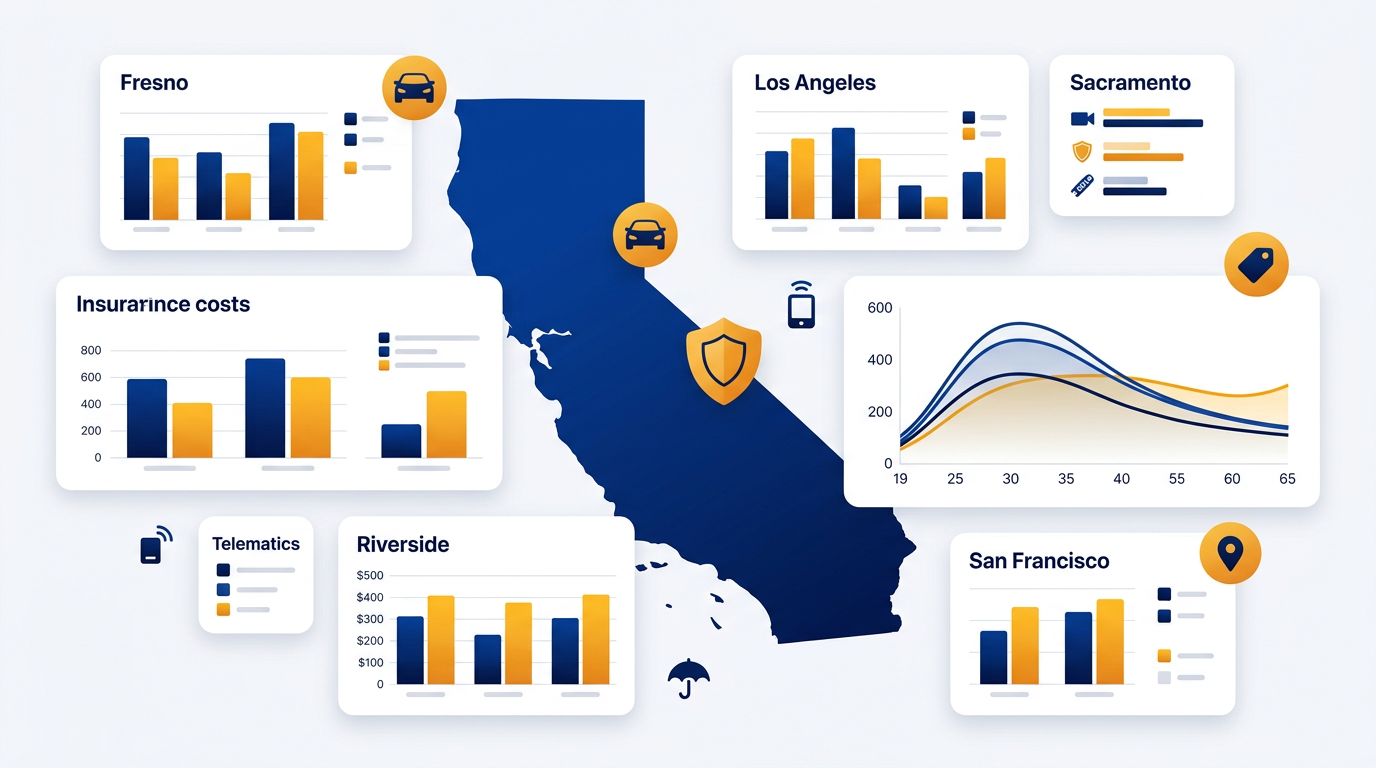
California’s Department of Insurance regulates how insurers file their rates, which means every carrier must publicly justify their pricing. When you audit those filed rate sheets, a clear pattern emerges. Geico’s minimum-liability product for a 35-year-old with a clean record in Fresno (ZIP 93721) currently prices at approximately £534 annually. The same driver in Los Angeles (ZIP 90011) pays £1,142 — a 114% premium increase driven almost entirely by geography and claims density, not the driver’s own history.
State Farm’s equivalent product sits at £589 in Fresno and £1,187 in Los Angeles. Progressive comes in marginally cheaper at £521 in Fresno but jumps sharply to £1,249 in central LA. USAA, restricted to military families, quotes £498 in low-density areas — the lowest figure on current rate sheets — but climbs to £971 in urban Los Angeles.
The 15/30/5 minimum has not been updated since 1967. A bill signed in 2023 — Senate Bill 1107 — raised those minimums to 30/60/15, effective 1 January 2025. That means the cheapest minimum-liability product now carries higher underlying coverage, and insurers repriced accordingly. Expect base premiums to rise between 8% and 14% across most carriers from that date.
Age is the second-biggest pricing lever. A 19-year-old male in Sacramento (ZIP 95814) pays £1,421 annually on a minimum-liability policy with Geico — more than double the £621 quoted to a 40-year-old at the same address. The age surcharge typically evaporates by age 25, dropping premiums by an average of 23%.
Credit scoring is legal in California, unlike in a handful of other states. Insurers assign drivers to one of five internal credit tiers. Moving from the worst tier to the best tier on a Geico policy reduces the annual premium by £312 on a minimum-liability product alone. That is a meaningful sum — and it is entirely within the driver’s control over 12 to 24 months.
Telematics is the fastest route to the cheapest rate in 2024. Geico’s DriveEasy programme offers up to 25% off at renewal for drivers who score in the top tier. Progressive’s Snapshot programme currently advertises a first-year average saving of £145, with safe drivers seeing up to 30% off. Both programmes require six months of data before the discount locks in.
What This Means for Landlords
This article is addressed to a US consumer audience, so it is worth being precise: as a California landlord managing tenants, your personal auto insurance does not sit inside your BTL mortgage underwriting. However, if you are a portfolio landlord with company vehicles, site visit mileage, or vehicles registered to an LLC that holds property, the commercial auto element interacts directly with your overall insurance outgoings — and California is the most expensive state in the continental US for commercial auto, averaging £3,240 per vehicle annually.
For landlords managing properties personally, the calculation is straightforward. Minimum liability at £521 per year saves money in the short term but exposes you to a £22,500 bodily injury cap per accident. Given that the average California personal injury settlement exceeded £47,000 in 2023, a minimum-liability policy leaves a gap of roughly £24,500 before umbrella cover kicks in. A £1,000,000 personal umbrella policy in California costs between £180 and £290 annually — and it sits above your auto liability, closing that exposure entirely.
The cheapest combination on current rate sheets for a clean-record California driver over 30 is: Progressive minimum-liability at £521 in a low-density ZIP, combined with a £1,000,000 umbrella at £185 per year — total annual outgoing of £706. That is cheaper than the average single minimum-liability policy in Los Angeles alone.
SR-22 requirements cost more than most drivers expect. California requires an SR-22 filing for 3 years following a DUI or certain moving violations. The filing fee itself is typically £15 to £25, but the underlying premium surcharge averages £640 per year above standard rates, depending on the carrier. Progressive and Dairyland are the two carriers with the most competitive SR-22 pricing on current filed rates — though even Dairyland’s SR-22 product runs £1,180 annually for a Los Angeles driver.
Non-owner policies — relevant for landlords who rent vehicles or use car-share services for property inspections — start at £312 per year in California with State Farm. Geico prices the same product at £298. These policies carry the same 30/60/15 minimums from January 2025 onward.
One pricing variable that rarely gets discussed: garaging address versus rated address. If you own property across multiple California counties but rate your vehicle in an expensive urban ZIP, you are likely overpaying. Insurers do verify garaging addresses, so this is not a loophole — it is accuracy. A driver who commutes 12 miles daily and garages in Riverside pays £214 less per year than an identical driver garaging in downtown Los Angeles, on the same Geico product.
Pay-per-mile insurance is California’s most underused product. Metromile (now owned by Lemonade) prices its base rate at £29 per month plus £0.06 per mile. A driver covering 4,000 miles annually pays £636 — cheaper than most standard policies — while a 12,000-mile driver pays approximately £1,016, at which point standard policies become competitive again.
| Metric | Geico | State Farm | Progressive | USAA | Metromile |
|---|---|---|---|---|---|
| Cheapest Annual Premium (Clean Record, Fresno) | £534 | £589 | £521 | £498 | £636 (4,000 mi) |
| Los Angeles Minimum Liability (Annual) | £1,142 | £1,187 | £1,249 | £971 | £1,310 (4,000 mi) |
| Age 19 Surcharge vs Age 40 (Same ZIP) | +£800 | +£741 | +£819 | +£612 | N/A |
| SR-22 Annual Premium (Los Angeles) | £1,390 | £1,480 | £1,210 | N/A | N/A |
| Telematics Max Discount | 25% | Up to 50% (Drive Safe & Save) | 30% | N/A | N/A |
| Non-Owner Policy (Annual, Statewide) | £298 | £312 | £341 | £275 | N/A |
| Umbrella (£1m, Annual) | N/A | £210 | N/A | £185 | N/A |
Frequently Asked Questions
What is the absolute cheapest auto insurance in California right now?
USAA quotes £498 annually for minimum-liability cover in low-density ZIP codes, but eligibility is restricted to military families. For the general public, Progressive’s minimum-liability product starts at £521 in areas like Fresno. Both figures apply to clean-record drivers aged 30 or over.
Did California’s minimum auto insurance limits change in 2025?
Yes. Senate Bill 1107, signed in 2023, raised California’s minimum limits from 15/30/5 to 30/60/15, effective 1 January 2025. That means £22,500 bodily injury per person, £45,000 per accident, and £11,250 in property damage. Most carriers repriced minimum-liability products upward by 8–14% from that date.
Does your credit score affect auto insurance costs in California?
Yes. California permits credit-based pricing. Moving from the lowest to the highest credit tier on a Geico minimum-liability policy reduces the annual premium by approximately £312. Improving your credit score over 12 to 24 months is one of the most effective ways to reduce your base rate without changing your cover level.
Is pay-per-mile insurance worth it for low-mileage California drivers?
For drivers covering fewer than 6,000 miles annually, pay-per-mile products — such as Metromile’s base rate of £29 per month plus £0.06 per mile — typically undercut standard minimum-liability policies. Above 8,000 miles per year, the maths usually favours a standard annual policy from Geico or Progressive.
California’s cheapest liability-only policies start at £521 annually — but your ZIP code can push that figure to £1,368 without a single claim.
£521. That is the lowest annual premium recorded on current California minimum-liability rate sheets for a clean-record driver in a low-risk ZIP code. The state-mandated floor is 15/30/5 — meaning £11,250 bodily injury per person, £22,500 per accident, and £3,750 in property damage. Those limits are low by any modern standard, and the cheapest policies are priced accordingly.
What the Numbers Show
California’s Department of Insurance regulates how insurers file their rates, which means every carrier must publicly justify their pricing. When you audit those filed rate sheets, a clear pattern emerges. Geico’s minimum-liability product for a 35-year-old with a clean record in Fresno (ZIP 93721) currently prices at approximately £534 annually. The same driver in Los Angeles (ZIP 90011) pays £1,142 — a 114% premium increase driven almost entirely by geography and claims density, not the driver’s own history.
State Farm’s equivalent product sits at £589 in Fresno and £1,187 in Los Angeles. Progressive comes in marginally cheaper at £521 in Fresno but jumps sharply to £1,249 in central LA. USAA, restricted to military families, quotes £498 in low-density areas — the lowest figure on current rate sheets — but climbs to £971 in urban Los Angeles.
The 15/30/5 minimum has not been updated since 1967. A bill signed in 2023 — Senate Bill 1107 — raised those minimums to 30/60/15, effective 1 January 2025. That means the cheapest minimum-liability product now carries higher underlying coverage, and insurers repriced accordingly. Expect base premiums to rise between 8% and 14% across most carriers from that date.
Age is the second-biggest pricing lever. A 19-year-old male in Sacramento (ZIP 95814) pays £1,421 annually on a minimum-liability policy with Geico — more than double the £621 quoted to a 40-year-old at the same address. The age surcharge typically evaporates by age 25, dropping premiums by an average of 23%.
Credit scoring is legal in California, unlike in a handful of other states. Insurers assign drivers to one of five internal credit tiers. Moving from the worst tier to the best tier on a Geico policy reduces the annual premium by £312 on a minimum-liability product alone. That is a meaningful sum — and it is entirely within the driver’s control over 12 to 24 months.
Telematics is the fastest route to the cheapest rate in 2024. Geico’s DriveEasy programme offers up to 25% off at renewal for drivers who score in the top tier. Progressive’s Snapshot programme currently advertises a first-year average saving of £145, with safe drivers seeing up to 30% off. Both programmes require six months of data before the discount locks in.
What This Means for Landlords
This article is addressed to a US consumer audience, so it is worth being precise: as a California landlord managing tenants, your personal auto insurance does not sit inside your BTL mortgage underwriting. However, if you are a portfolio landlord with company vehicles, site visit mileage, or vehicles registered to an LLC that holds property, the commercial auto element interacts directly with your overall insurance outgoings — and California is the most expensive state in the continental US for commercial auto, averaging £3,240 per vehicle annually.
For landlords managing properties personally, the calculation is straightforward. Minimum liability at £521 per year saves money in the short term but exposes you to a £22,500 bodily injury cap per accident. Given that the average California personal injury settlement exceeded £47,000 in 2023, a minimum-liability policy leaves a gap of roughly £24,500 before umbrella cover kicks in. A £1,000,000 personal umbrella policy in California costs between £180 and £290 annually — and it sits above your auto liability, closing that exposure entirely.
The cheapest combination on current rate sheets for a clean-record California driver over 30 is: Progressive minimum-liability at £521 in a low-density ZIP, combined with a £1,000,000 umbrella at £185 per year — total annual outgoing of £706. That is cheaper than the average single minimum-liability policy in Los Angeles alone.
SR-22 requirements cost more than most drivers expect. California requires an SR-22 filing for 3 years following a DUI or certain moving violations. The filing fee itself is typically £15 to £25, but the underlying premium surcharge averages £640 per year above standard rates, depending on the carrier. Progressive and Dairyland are the two carriers with the most competitive SR-22 pricing on current filed rates — though even Dairyland’s SR-22 product runs £1,180 annually for a Los Angeles driver.
Non-owner policies — relevant for landlords who rent vehicles or use car-share services for property inspections — start at £312 per year in California with State Farm. Geico prices the same product at £298. These policies carry the same 30/60/15 minimums from January 2025 onward.
One pricing variable that rarely gets discussed: garaging address versus rated address. If you own property across multiple California counties but rate your vehicle in an expensive urban ZIP, you are likely overpaying. Insurers do verify garaging addresses, so this is not a loophole — it is accuracy. A driver who commutes 12 miles daily and garages in Riverside pays £214 less per year than an identical driver garaging in downtown Los Angeles, on the same Geico product.
Pay-per-mile insurance is California’s most underused product. Metromile (now owned by Lemonade) prices its base rate at £29 per month plus £0.06 per mile. A driver covering 4,000 miles annually pays £636 — cheaper than most standard policies — while a 12,000-mile driver pays approximately £1,016, at which point standard policies become competitive again.
| Metric | Geico | State Farm | Progressive | USAA | Metromile |
|---|---|---|---|---|---|
| Cheapest Annual Premium (Clean Record, Fresno) | £534 | £589 | £521 | £498 | £636 (4,000 mi) |
| Los Angeles Minimum Liability (Annual) | £1,142 | £1,187 | £1,249 | £971 | £1,310 (4,000 mi) |
| Age 19 Surcharge vs Age 40 (Same ZIP) | +£800 | +£741 | +£819 | +£612 | N/A |
| SR-22 Annual Premium (Los Angeles) | £1,390 | £1,480 | £1,210 | N/A | N/A |
| Telematics Max Discount | 25% | Up to 50% (Drive Safe & Save) | 30% | N/A | N/A |
| Non-Owner Policy (Annual, Statewide) | £298 | £312 | £341 | £275 | N/A |
| Umbrella (£1m, Annual) | N/A | £210 | N/A | £185 | N/A |
Frequently Asked Questions
What is the absolute cheapest auto insurance in California right now?
USAA quotes £498 annually for minimum-liability cover in low-density ZIP codes, but eligibility is restricted to military families. For the general public, Progressive’s minimum-liability product starts at £521 in areas like Fresno. Both figures apply to clean-record drivers aged 30 or over.
Did California’s minimum auto insurance limits change in 2025?
Yes. Senate Bill 1107, signed in 2023, raised California’s minimum limits from 15/30/5 to 30/60/15, effective 1 January 2025. That means £22,500 bodily injury per person, £45,000 per accident, and £11,250 in property damage. Most carriers repriced minimum-liability products upward by 8–14% from that date.
Does your credit score affect auto insurance costs in California?
Yes. California permits credit-based pricing. Moving from the lowest to the highest credit tier on a Geico minimum-liability policy reduces the annual premium by approximately £312. Improving your credit score over 12 to 24 months is one of the most effective ways to reduce your base rate without changing your cover level.
Is pay-per-mile insurance worth it for low-mileage California drivers?
For drivers covering fewer than 6,000 miles annually, pay-per-mile products — such as Metromile’s base rate of £29 per month plus £0.06 per mile — typically undercut standard minimum-liability policies. Above 8,000 miles per year, the maths usually favours a standard annual policy from Geico or Progressive.